When One Answer Isn’t Enough
In recent years, many patients presenting with severe and debilitating neurological symptoms—headaches (both supine and orthostatic), seizure-like episodes, dizziness, visual disturbances, sudden hearing loss, pulsatile or constant tinnitus, and sudden weakness—have often been told the same phrase: “This is a functional neurological disorder (FND).”
At first glance, it may sound like an answer. In reality, for many it becomes a sentence: being labeled as “functional” patients, trapped in a limbo between neurology and psychiatry – often without any further investigation. A diagnosis that closes doors rather than opening them.
The problem is that some of these patients are not suffering from a functional disorder at all, but from an overlooked organic condition: CCSVI (Chronic Cerebrospinal Venous Insufficiency).
The risk is enormous: mistaking a real vascular problem for a “psychogenic” disorder means not only missing the correct diagnosis, but also allowing symptoms to worsen—with potentially irreversible consequences.
Functional Neurological Disorder: From Definition to Label
FND is described as a disorder of nervous system function in the absence of visible organic lesions. The symptoms are real, not imagined, but their origin is considered non-structural.
Among the most common manifestations:
- tremors, tics, and abnormal movements
- non-organic weakness or paralysis
- psychogenic seizure-like episodes
- visual disturbances, dizziness, loss of balance
- altered sensation
In theory, the diagnosis should be based on positive clinical signs and not merely on ruling out other conditions. In practice, however, FND is often used as a convenient label: when CT scans and MRIs show nothing, the problem is simply deemed “functional.” And this doesn’t happen only in Italy: it’s a widespread trend across the world, with patients everywhere being dismissed with this diagnosis without further investigation.
A review published in Practical Neurology (Edwards & Bhatia, 2021 – PubMed) highlights that FND is common in emergency departments and neurology wards, but also acknowledges how often the diagnosis is poorly communicated – leaving patients stigmatized.
The result is that, in clinical practice, FND risks becoming a diagnostic wastebasket: everything that isn’t understood ends up in it.
CCSVI: An Overlooked Organic Cause
CCSVI was first described in 2006 as a vascular condition characterized by abnormalities in cerebrospinal venous outflow, caused by stenosis of the jugular veins (defective valves, hypoplasia, aplasia, or other vascular malformations). Later studies also identified extrinsic compressions of the jugular veins by surrounding structures – bones, muscles, ligaments, and nearby arteries.
The consequences are physiopathologically logical:
- venous stasis
- cerebral hypoxia
- altered cerebrospinal fluid drainage
- increased intracranial pressure
- chronic inflammation
And the symptoms? The very same ones that are often dismissed today as FND: orthostatic headache, brain fog, seizure-like episodes, dizziness, visual disturbances, and dysphagia.
👉 CCSVI: Diagnosis and Symptoms
The crucial point is that CCSVI does not always show up on standard tests: an MRI taken supine, in a neutral frontal position, may appear completely normal, while the problem only becomes evident under dynamic or postural conditions.
When Standard Tests Aren’t Enough: The Posture Factor
Medicine is accustomed to working with “classic” protocols: MRI performed in the supine position, EcoColorDoppler done supine or upright at 90 degrees in a neutral frontal position—static tests that do not reflect real-life conditions.
But cerebral and spinal venous flow is highly dynamic and strongly influenced by posture.
A patient lying flat at 0 degrees may show obstructions, flow reversals, or venous collapses, while the very same patient evaluated in an upright 90-degree position may reveal these pathologies—or even display completely normal venous return.
It has been shown that jugular compressions cannot be reliably detected in just one postural state or in a single neutral head position.
For CCSVI, performing dynamic tests is essential:
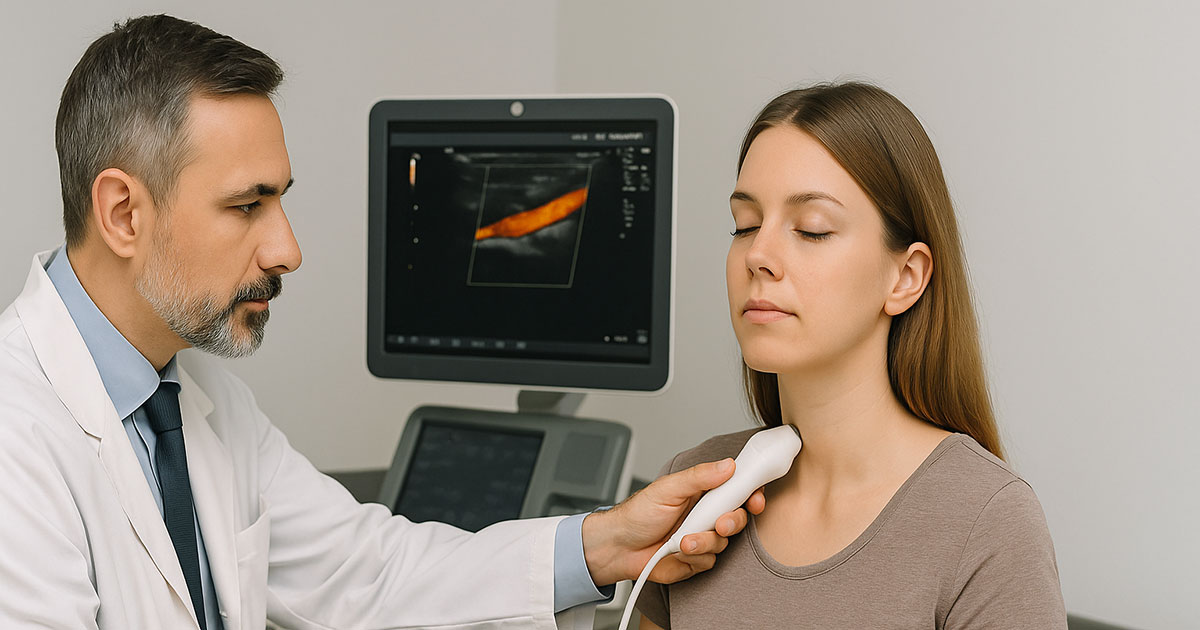
- EcoColorDoppler in both upright and supine positions, with the head in a neutral frontal position and during dynamic head maneuvers
- Selective venography with postural variations
- CBCT to study bone compressions, both static and dynamic
- Evaluations during maneuvers such as Valsalva or neck rotations
This methodological difference can mark the boundary between an accurate diagnosis of CCSVI and a hasty diagnosis of a functional disorder.
And yet, most physicians don’t go beyond standardized tests. They stop there and hand the patient a reductive label. This is a cultural and clinical limitation that must be called out.
FND as a Diagnostic Alibi
Many neurologists defend FND as a modern and “positive” diagnosis. But in daily practice, it all too often becomes an alibi – used to justify the lack of answers, rather than admitting that perhaps the tools being used are simply not enough.
The patient, meanwhile, doesn’t receive an explanation but a stigma: “it’s functional, not organic.”
A label that pushes them toward psychotherapy, while the real cause goes unnoticed.
This does not mean denying that functional disorders exist. It means calling out the fact that, in far too many cases, FND is used as a lazy diagnosis – one that closes doors instead of opening them.
Patient Testimonies
The stories are strikingly similar:
- years of debilitating, progressive symptoms
- standard tests reported as “normal”
- a diagnosis of FND
- years of psychotherapy and anxiolytic medications with no benefit
- finally, targeted venous investigations and a diagnosis of CCSVI
- clinical improvement after treatment (physiatry, osteopathy, chiropractic care, angioplasty, surgical decompression)
These testimonies expose the failure of an exclusively neurological approach. They are not isolated cases but a recurring pattern that deserves scientific attention.
The Wound of Stigma
Receiving an FND diagnosis means being told: “your symptoms are real, but they have no organic basis.”
In other words, it is often perceived as: “it’s all in your head.”
The consequences are devastating:
- loss of trust in medicine
- social isolation
- loss of credibility even within the family
- abandonment of care and despair
And yet, behind those symptoms there may be an objective, diagnosable, and treatable condition such as CCSVI.
CCSVI and Controversy: A Divided Science
From the very beginning, CCSVI has faced strong opposition, especially from the neurology community, due to its initial proposed link with multiple sclerosis. Nevertheless, numerous studies have been published in the literature reporting varying percentages of CCSVI among patients with multiple sclerosis.
Several studies, such as the one by Zamboni and colleagues published in BMC Medicine (2013), have nevertheless documented venous abnormalities with potential clinical consequences.
The scientific community remains divided. But to completely ignore CCSVI and retreat into an FND diagnosis is to deny the complexity of clinical reality.
The Responsibility of Medicine
The task of medicine is not to settle for what is simple, but to search for the truth. Labeling a patient as “functional” without carefully ruling out other organic causes—including venous ones—is not just a clinical mistake. It is an act that betrays the patient’s trust.
What we need are broader protocols—ones that integrate classical neurological evaluation with dynamic venous testing. We need physicians willing to look beyond the limits of standard literature.
Only in this way can we prevent an FND diagnosis from becoming a lazy and harmful shortcut.
Looking Beyond the Label
Functional neurological disorder does exist, but today it is overused. It has become the easy label for those who find nothing in standard tests.
CCSVI is a concrete example of how real symptoms are dismissed as “functional,” when in fact there are precise, organic causes—diagnosable and treatable.
Medicine must not stop searching.
Every time the quick route is chosen—the functional label—there is a risk of extinguishing the hope of those who suffer.
Every patient deserves concrete answers, not labels. For this reason, I invite you, if you wish, to book a consultation with me at my practice for a personalized CCSVI evaluation.