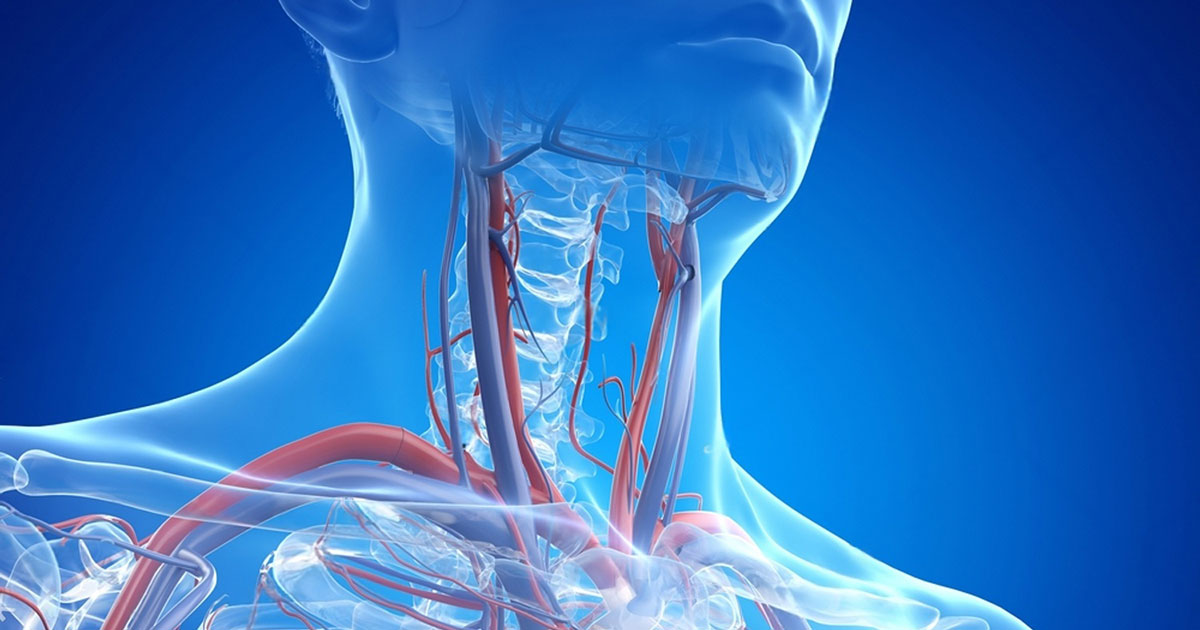
Imagine your brain as a bustling city, and the venous system as its drainage network.
When everything’s working properly, blood flows out smoothly—just like rainwater disappearing down the drains after a storm. But if something blocks that outflow—a compression, a faulty valve, or a narrowing of the vessels—pressure builds up. And sometimes, all it takes is shifting from lying down to sitting up to trigger a cascade of symptoms.
I’ve been working with CCSVI for years—a condition that’s still relatively unknown, yet can have a very real impact on quality of life. And the more I get to know patients, the more I realize just how much posture—yes, something as simple as how we sit, sleep, or hold our head—can affect overall well-being, especially in people dealing with venous drainage issues.
If you suffer from unexplained headaches, a sense of pressure in your head, blurred vision, or ringing in your ears that gets worse when you change position, you may have already felt this connection in your own body—whether you realized it or not.
What is venous flow and why does it matter?
Venous flow is the system that allows “used” blood to return to the heart, where it can be reoxygenated in the lungs. In the brain, this process happens primarily through the internal jugular veins.
Unlike arteries, veins don’t benefit from the heart’s direct pumping action.
Their flow depends on:
- Gravity
- Intracranial pressure
- Body position
- Presence of obstructions or compressions
When venous drainage isn’t efficient, it can lead to intracranial congestion—bringing on symptoms that range from headaches and pressure behind the eyes to visual disturbances and cognitive issues.
CCSVI: when drainage gets blocked
CCSVI (Chronic Cerebrospinal Venous Insufficiency) involves narrowings, obstructions, or malformations in the main venous outflow pathways of the brain and spinal cord. The causes may include:
- Internal jugular vein stenosis
- Compression from muscles or bony structures
- Malformed venous valves
- Abnormal pressure in the dural venous sinuses
Common symptoms include:
- Positional headaches
- Head pressure
- Pulsatile tinnitus
- Intermittent visual disturbances
- A “heavy head” sensation
Does posture change the flow?
Oh yes- it absolutely does.
When lying down, the jugular veins dilate and drain blood efficiently.
But when standing, these veins naturally tend to collapse. At that point, drainage shifts to secondary pathways, like the vertebral plexus.
But what if there are already obstructions?
A few examples:
- Sleeping with your neck hyperextended can reduce blood flow
- Keeping your head turned to one side may compress a jugular vein
- Some people find relief only in specific positions—like lying on one side or with their head elevated
When gravity works against you
In theory, gravity should help blood drain from the head. But if there are bottlenecks—like stenosis, muscle compressions, or stuck valves—it turns into an obstacle. Blood starts to pool, pressure rises, and symptoms get worse.
What science tells us
In recent years, several scientific studies have highlighted how cerebral venous flow can be significantly affected by body posture, particularly in patients with CCSVI (Chronic Cerebrospinal Venous Insufficiency). Let’s take a closer look at some key findings.
Study by Prof. Paolo Zamboni et al. – PLoS ONE (2009)
Professor Paolo Zamboni’s team—among the first to systematically investigate CCSVI—used EcoColor Doppler ultrasound in patients with multiple sclerosis to assess venous flow in the internal jugular veins and the azygos system.
One of the most striking findings was the abnormal flow behavior in the supine position:
In several cases, the jugular veins showed absent, blocked, or even reversed flow, meaning blood was flowing back toward the brain instead of draining normally toward the heart.
This is highly unusual—lying down should cause the jugular veins to dilate and drain efficiently.
When that doesn’t happen, it strongly suggests the presence of obstructions, stenosis, or malformed valves, which may behave differently depending on gravity and head and neck position.
Research by Haacke et al. – AJNR (2010)
Dr. Haacke conducted extensive studies using MRI and venous mapping techniques to evaluate changes in blood flow caused by external compressions.
His findings revealed that some patients experience mechanical interference from surrounding structures—such as compression of the internal jugular veins by the scalene muscles, the omohyoid muscle, or bony structures like the styloid process and the hyoid bone.
What’s particularly striking is that even slight head rotation or tilting can alter the hemodynamic profile—sometimes improving flow, sometimes reducing it, or even causing it to cease entirely.
This suggests that everyday neck posture—like sleeping with the head turned or using pillows that are too high—may worsen venous congestion in individuals who are already predisposed.
Clinical Observations by Dr. Salvatore Sclafani – Understanding CCSVI
Dr. Salvatore Sclafani, an expert in interventional radiology, has documented numerous cases where venous valve behavior appeared to be dynamic, meaning it changed depending on head and body position.
In some patients, venography revealed valves that looked completely normal while sitting upright—but would shut closed when lying down, effectively blocking venous outflow.
In other cases, abnormalities only became apparent during specific maneuvers, such as neck rotation or forced extension, reinforcing the idea that extracranial venous flow is heavily influenced by movements of the cervical spine.
These studies—though different in methodology—point to a common conclusion:
Posture, neck movement, and individual venous anatomy can significantly impact how blood drains from the brain.
And in patients with CCSVI, these factors not only worsen symptoms, but can also mask or distort diagnostic results—especially if exams are not performed dynamically or in upright/seated positions.
Symptoms that shift with posture: an important clue
Many CCSVI patients report:
- Headaches that worsen when standing
- Pressure behind the eyes upon getting up
- “Brain fog” and a sense of imbalance
- Positional pulsatile tinnitus
- A feeling of fluid that just won’t drain
These are not symptoms to ignore. They may signal posture-related disturbances in cerebrospinal venous outflow—and they deserve proper attention.
Diagnosis: why dynamic testing is essential
Many conventional diagnostic tests don’t take posture into account. A standard brain MRI, for example, is typically performed with the patient lying down—it may appear completely normal, even in cases where the patient experiences clear symptoms while standing or sitting. This is one of the reasons why so many cases of CCSVI go undetected.
Some specialized centers offer upright MRI (also known as weight-bearing or vertical MRI), which allows clinicians to observe changes in vascular and spinal structures while the patient is in an upright position. Though still not widely available, this technique can be extremely valuable in revealing compressions or flow abnormalities that are simply not visible when lying flat.
However, the most accessible and informative test remains the dynamic EchoColor Doppler of the neck veins. This ultrasound exam allows real-time observation of venous flow behavior during changes in position—from lying down to sitting or standing. If the flow stops, shows signs of reflux, or triggers collateral circulation only in certain positions, it could be a critical warning sign.
Your daily posture affects you more than you think
The way you sleep, sit, or even look at your smartphone can affect how well your brain drains blood. Watch out for:
- Pillows that are too high or too low
- A closed or hunched neck posture
- Long hours working with your neck bent forward
- Pillows that overextend your neck
What can you do?
- What to consider: A targeted clinical evaluation with dynamic EchoColor Doppler
- Postural physiotherapy: exercises to improve cervical mobility and diaphragmatic breathing
- Orthopedic pillows: to support healthy cervical lordosis
- Mindful lifestyle habits: to reduce mechanical stress on the neck and upper spine
CCSVI isn’t just about veins—it’s about how our body interacts with space. Posture, position, and movement are key players in determining the quality of venous flow. Not all neurological symptoms originate in the brain—some begin with a simple blockage in drainage.
If you see yourself in these descriptions, don’t brush off the signs. They could be the key to understanding symptoms that, until now, no one has been able to explain.
👉 Want to learn more? Visit the main page to explore CCSVI in depth:
www.raffaellopagani-ccsvi.it
Do you have questions or want a personalized assessment?
Fill out the form on this page—I’ll get back to you personally as soon as possible.