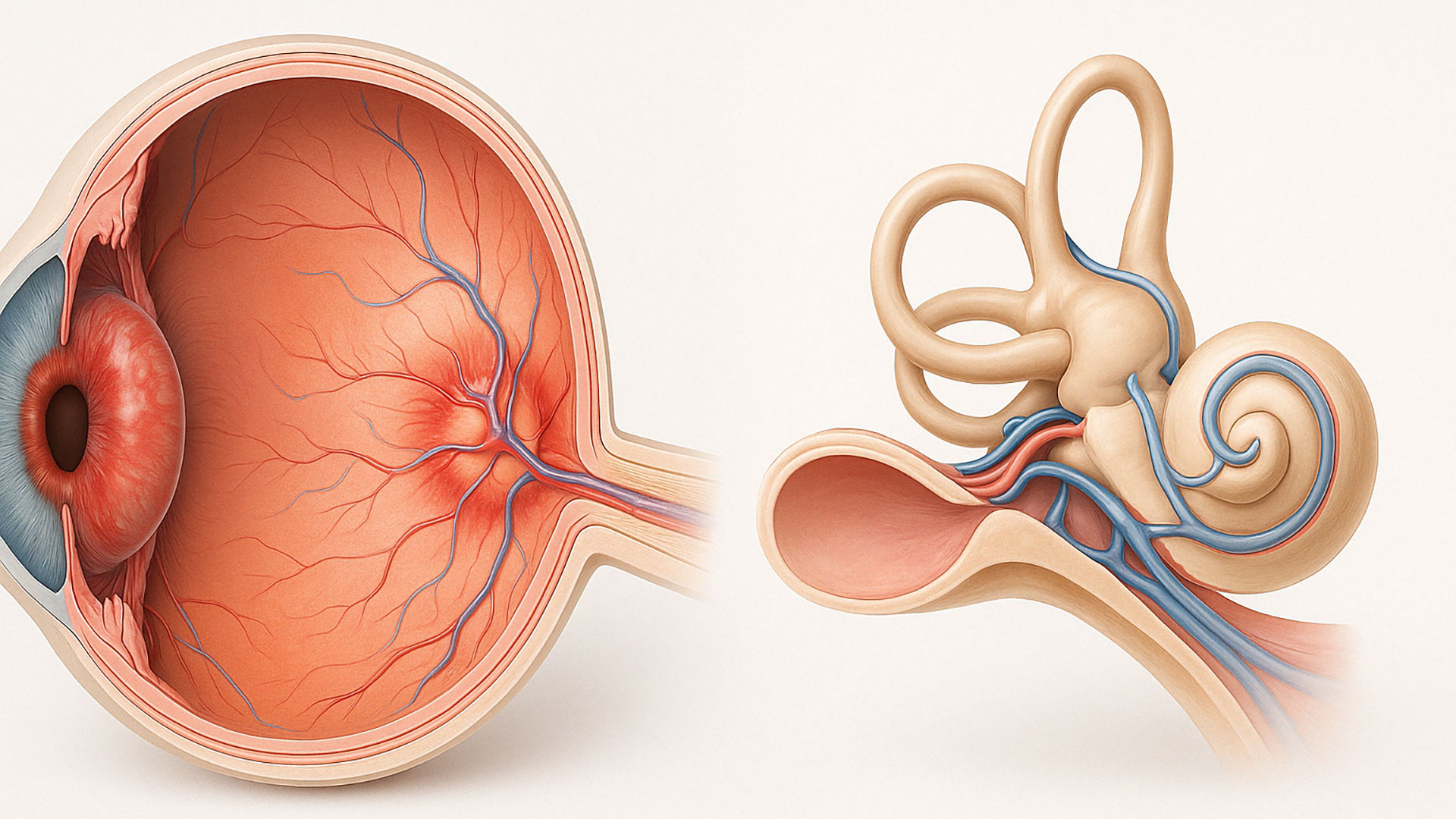
CCSVI (Chronic Cerebrospinal Venous Insufficiency) is a vascular condition that has gained increasing attention for its potential connection to a wide range of clinical manifestations—not only neurological but also ocular and auditory. In particular, some patients diagnosed with CCSVI experience symptoms affecting the visual (eyes) and auditory (ears) systems, symptoms that often remain unexplained from the perspective of other medical specialists.
This page is dedicated to exploring the connections between CCSVI, visual disturbances, and ear-related symptoms, shedding light on the underlying mechanisms and outlining the available treatment options.
Come la CCSVI influisce su occhi e orecchie
The brain’s venous system plays a vital role in draining “return” blood from the brain and sensory organs back to the heart. When this system is compromised—as it is in CCSVI—venous flow slows down, leading to blood stagnation that can cause increased local venous pressure, a buildup of toxic metabolites, and reduced oxygen exchange.
From an anatomical standpoint, the eyes and the inner ear—particularly the vestibular system—are closely connected to the cranial venous system. Inadequate drainage in these areas can lead to significant functional disturbances.
Sintomi oculari associati alla CCSVI
Many patients with CCSVI report a range of visual disturbances, including:
- Diplopia (visione doppia), dovuta a disfunzioni nei nervi oculari o pressione intracranica aumentata
- Annebbiamento visivo, spesso intermittente e associato a cambi di postura
- Fotofobia e affaticamento visivo
- Papilledema, ovvero gonfiore del nervo ottico, rilevabile tramite esame del fondo oculare
- Disturbi del campo visivo, con percezione di aree più scure o riduzione della visione periferica
These symptoms are often mistakenly attributed to primary eye disorders, but they frequently persist despite standard ophthalmological treatments and tend to improve only when the underlying vascular issue is addressed.
Sintomi uditivi e vestibolari
The auditory system can also be affected by CCSVI. Common symptoms include:
Tinnitus (ringing, buzzing, pulsing sounds)
Feeling of ear fullness or muffled hearing
Postural dizziness
Menière’s syndrome, characterized by episodes of balance loss, tinnitus, and fluctuating hearing loss
Chronic instability not explained by standard otologic abnormalities
Specifically, venous drainage of the inner ear occurs through veins that flow into the internal jugular vein. Any disruption to this flow—such as extrinsic compression or valve stenosis—can alter pressure within the labyrinth and trigger the onset of debilitating symptoms.
Perché la CCSVI è spesso sottovalutata
Many of these symptoms are subtle, intermittent, or multifactorial. Patients often find themselves going from one specialist to another—ophthalmologists, ENT doctors, neurologists—without ever receiving a clear diagnosis. This happens because, in most evaluations, only arterial flow is assessed, while the venous system is largely overlooked.
CCSVI therefore remains one of the potential “hidden” causes to consider in cases where standard tests come back normal, yet symptoms persist or worsen.
Diagnosi venosa: un passo fondamentale
The most effective diagnostic tool for identifying venous drainage issues remains intracranial and extracranial venous Doppler ultrasound (EcoColorDoppler), which should be performed both in a supine and seated position to capture dynamic flow variations.
In some cases, additional imaging such as Magnetic Resonance Venography (MRV) is needed, and in more complex situations, catheter venography combined with IVUS (intravascular ultrasound) may be required to accurately detect any venous compressions or malformations.
Terapie mirate per i disturbi oculari e auricolari nella CCSVI
Once the venous cause has been identified, a personalized treatment plan can be developed.
Conservative approaches
- Postural therapies to relieve cervical venous compressions
- Cranio-cervical osteopathy to enhance intracranial drainage
- Targeted physiotherapy to relax muscles that compress the veins
- Interventional approaches
- PTA (Balloon Angioplasty) in cases of significant stenosis
- Decompressive surgery when bony compressions are present (C1-C2, styloid process, etc.)
- Treatment of dysfunctional venous valves using endovascular techniques
Disturbi visivi e uditivi associati alla CCSVI
| Disorder | Possible Vascular Cause | Therapeutic Approach |
|---|---|---|
| Diplopia | Venous congestion affecting the optic nerve | Venous diagnosis + cervical physiotherapy |
| Visual Blurring | Intracranial venous hypertension | EcoColorDoppler + compression treatment |
| Papilledema | Impaired venous outflow | Ophthalmological assessment + vascular approach |
| Tinnitus | Venous congestion in the inner ear | Osteopathy + vascular imaging |
| Menière’s Syndrome | Obstructed venous outflow from the inner ear | Postural therapies + CCSVI diagnosis |
CCSVI may play a key role in many unexplained visual and auditory disorders, particularly in younger patients or those with postural issues, chronic headaches, or unclear diagnoses.
A careful vascular assessment of the cranial and cervical venous system can make all the difference, both for achieving an accurate diagnosis and for improving treatment outcomes.
Are you experiencing persistent, unexplained visual or auditory symptoms?
📞 Contact Dr. Raffaello Pagani’s office for a comprehensive evaluation of your cerebral and cervical venous system.