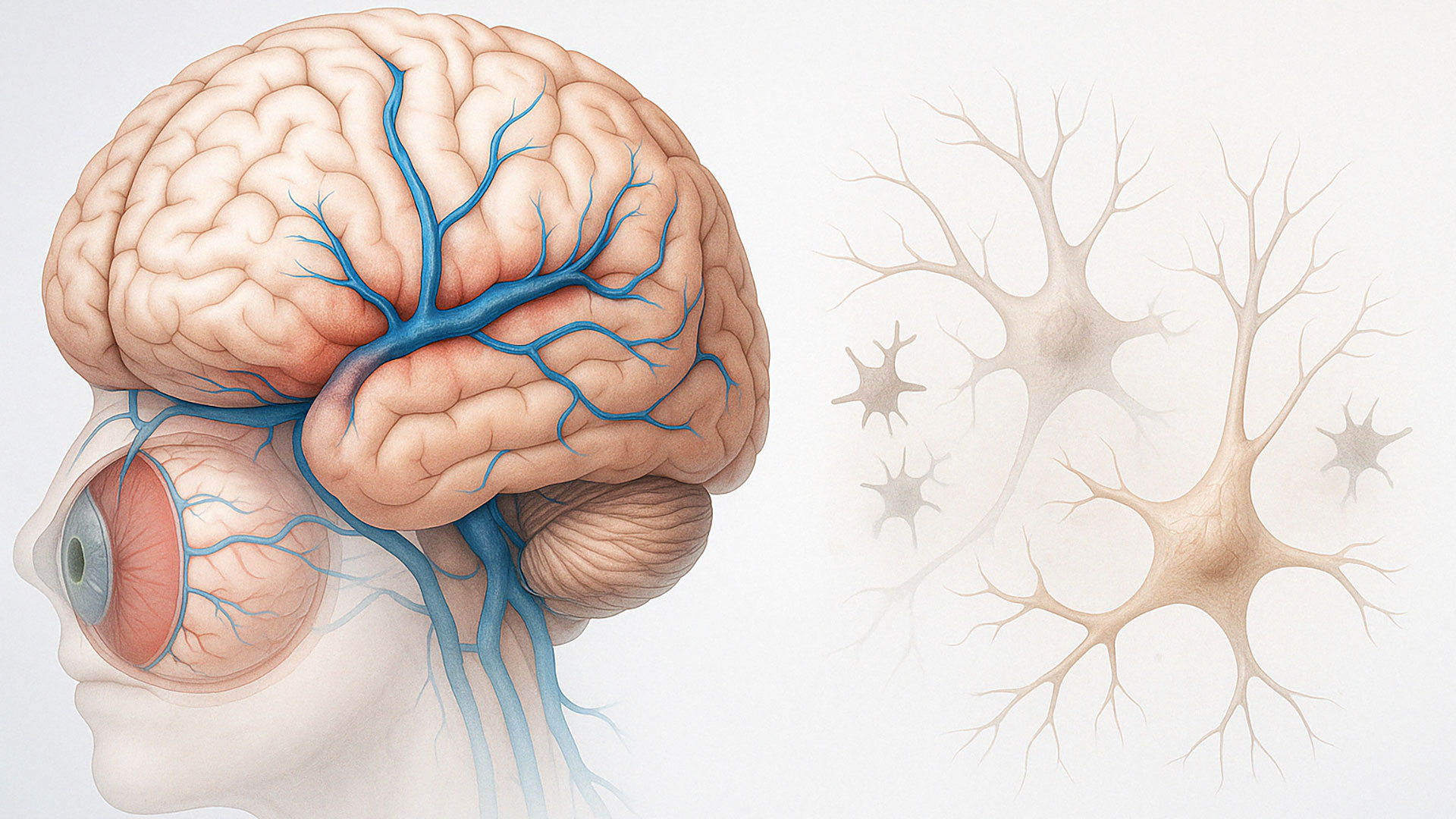
In recent years, medical research has begun to explore a possible connection between CCSVI (Chronic Cerebrospinal Venous Insufficiency) and some of the most complex diseases of the central nervous system: Alzheimer’s, Parkinson’s and Amyotrophic Lateral Sclerosis (ALS). Although these are distinct clinical conditions, emerging evidence suggests a common thread— impaired venous drainage from the brain.
While no direct cause-and-effect relationship has been established, numerous studies are investigating the role that chronic venous congestion might play in the progression or worsening of neuronal damage typical of neurodegenerative diseases. On this page, we explore the proposed mechanisms, the available data, and the potential implications these findings could have for diagnosis and treatment.
Venous Reflux and Oxidative Stress: A Possible Meeting Point
The brain is incredibly sensitive to the chemical environment that surrounds it. The presence of free radicals, inflammatory cytokines, or metabolic waste can seriously compromise the integrity of neurons and synapses. One of the primary roles of proper venous function is to drain these harmful substances and help maintain a balanced, healthy microenvironment within the brain.
When CCSVI is present, this drainage can become slowed or obstructed, leading to the buildup of carbon dioxide, toxins, and metabolic waste. In individuals with a predisposition, this environment could trigger a chronic neuroinflammatory process, which in turn may accelerate neuronal death.
CCSVI and Alzheimer’s: The Impaired Clearance Hypothesis
In Alzheimer’s disease, the leading pathogenic theory points to the buildup of beta-amyloid plaques and dysfunction of the glymphatic system. Recently discovered, this system acts as a “clean-up network,” using lymphatic and venous pathways to clear toxic proteins from the brain.
Disruptions in intracranial venous pressure and venous outflow could impair the glymphatic system, reducing the clearance of beta-amyloid. Some studies have identified venous abnormalities—such as jugular hypoplasia, reflux, and stenosis—in patients with Alzheimer’s disease, even in the absence of a clear CCSVI diagnosis.
While a direct causal relationship cannot be confirmed, the idea that impaired venous clearance might contribute to the buildup of neurotoxic substances is a plausible hypothesis and certainly warrants further clinical investigation.
CCSVI and Parkinson’s: The Role of Microvascular Changes
Parkinson’s disease, best known for the degeneration of the substantia nigra and the resulting drop in dopamine levels, also has a vascular component that is often overlooked. Several studies have reported the presence of cerebral microinfarcts, capillary flow abnormalities, and chronic hypoperfusion in key areas affected by the disease.
CCSVI, by slowing venous circulation, could worsen these microvascular conditions, especially in the early stages or in individuals with a genetic predisposition. Additionally, the rise in intracranial pressure seen in certain forms of CCSVI may increase the permeability of the blood-brain barrier, making it easier for inflammatory molecules to infiltrate brain tissue.
CCSVI and ALS: Emerging Hypotheses
Amyotrophic Lateral Sclerosis (ALS) is a rapidly progressing neurodegenerative disease with multifactorial causes that remain only partially understood. In recent years, some researchers have investigated the presence of venous abnormalities in ALS patients, identifying extracranial venous reflux or compressions—sometimes resembling those typically seen in CCSVI.
In some cases, patients have reported slight improvements in symptoms such as headaches and neck tension following treatments aimed at venous decompression. However, it is important to emphasize that there is currently no clear evidence linking CCSVI to ALS progression. Still, it is hypothesized that a more inflamed and congested brain environment could potentially worsen the course of the disease.
Clinical and Diagnostic Implications
In light of these observations—though not yet conclusive—assessing venous function in patients with neurodegenerative diseases may provide valuable additional insights. It’s not simply about confirming or ruling out CCSVI, but also about identifying any abnormalities that could worsen an already complex clinical picture.
As always, diagnosis involves the use of:
- EcoColorDoppler transcranico ed extracranico, anche in posizione eretta
- Risonanza magnetica venosa (MRV)
- Venografia con catetere, nei casi più complessi
All of this is done in close collaboration with the neurologist, neurosurgeon, and physiatrist to determine whether a vascular component is present that warrants therapeutic attention.
Treatment: When Is It Worth Intervening?
If a true venous compression or significant stenosis is identified, targeted interventions such as the following may be considered:
Cranio-cervical physiotherapy and osteopathy to reduce dynamic compressions
PTA (venous angioplasty) in selected cases
Decompressive surgery, only when indicated and following a multidisciplinary evaluation
It’s important to note that there are still no official protocols for treating CCSVI in patients with neurodegenerative diseases. However, improving venous drainage may help support overall well-being, easing associated symptoms such as headaches, mental fatigue, and sleep disturbances.
The relationship between CCSVI and neurodegenerative diseases such as Alzheimer’s, Parkinson’s, and ALS remains a relatively young but promising field of research. While it cannot be stated that CCSVI is a direct cause of these conditions, the hypothesis that impaired venous outflow might worsen symptoms or influence disease progression is increasingly supported by clinical and instrumental evidence.
Deepening our understanding of these connections could not only open up new therapeutic possibilities but also help tailor more personalized care pathways, ultimately improving patients’ quality of life.
Comparing Neurodegenerative Diseases and CCSVI
| Condition | Possible Venous Abnormalities | Symptoms Shared with CCSVI |
|---|---|---|
| Alzheimer | Cerebral Venous Hypoperfusion | Brain fog, cognitive impairment |
| Parkinson | Mesencephalic venous congestion | Rigidity, motor slowing |
| ALS | ASpinal Venous Drainage Abnormalitiese | Paresthesia, muscle weakness |
No, but it may act as an aggravating co-factor, contributing to a brain environment that is less supportive of neuronal health.
There is no definitive evidence yet, but many patients report subjective improvements after targeted interventions on the venous system.
Through non-invasive methods such as Doppler ultrasound (EcoColorDoppler) and, when needed, more advanced techniques like MRV (Magnetic Resonance Venography) or IVUS (Intravascular Ultrasound).
It depends on the clinical situation. In many cases, even a partial improvement in venous drainage can bring relief from secondary symptoms.
Have you been diagnosed with Alzheimer’s, Parkinson’s, or ALS and would like to explore the possible role of the venous system?
Get in touch for a personalized, in-depth evaluation focused on your specific clinical picture. Every journey begins with a comprehensive diagnosis.